Normandy D-Day museums and memorials: what is worth your time
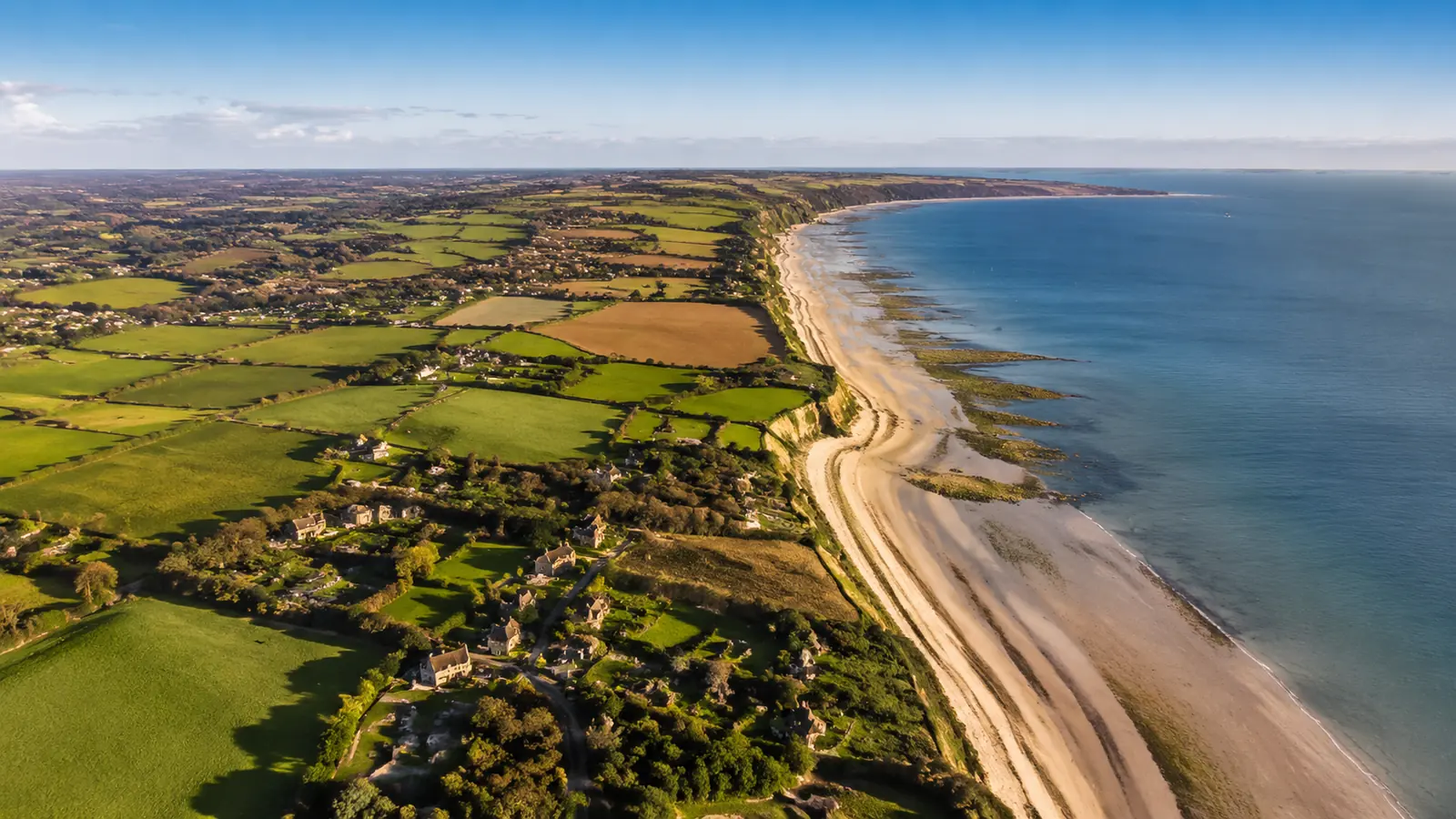
Normandy American Cemetery and Memorial, Colleville-sur-Mer
Free, open 09:00 to 17:00 daily, closed only on 25 December and 1 January, with admission closing half an hour before the gates. 9,389 graves and 1,557 names on the Walls of the Missing, with rosettes beside the names of those since recovered and identified. More than a million people came in 2024.
Two practical things. First, the flag-lowering ceremony takes place an hour before closing, so 16:00 on the current schedule; that is what most visitors remember, and every guided itinerary is built to finish there. Second, a pre-registration system is coming. The American Battle Monuments Commission’s own page describes a launch late in 2026 for reservations from summer 2027, applying to individuals, groups and tour operators alike, and says it will remain free and that next of kin will always be able to visit at a time of their choosing. An earlier press report gave a different, earlier start date. The timing is not settled — check abmc.gov before you travel.
Pointe du Hoc
Free. Open 09:00 to 17:00 from 1 April to 30 September, and 09:00–12:30 plus 13:30–17:00 from 1 October to 31 March. Allow 45 minutes to an hour. This is the most intact bombed landscape on the coast: a cratered clifftop with German casemates and the observation post still on it. The Rangers’ assault began at 07:11, the 155mm guns they came for had already been moved inland, and of about 190 men engaged only 90 were still fit to fight.
Two current caveats. The platforms on top of the observation bunker and other structures are closed for safety and preservation, and visitors must stay on the marked paths. And the operator of the half-day tour from Bayeux warns that Pointe du Hoc may close for renovation works during 2026–2027; if it does, that stop is replaced with the Longues-sur-Mer battery. Check before booking — the half-day review covers what the substitution actually gives you.
The paid museums, ranked by whether I would go in
- Airborne Museum, Sainte-Mère-Église — the best of the beach museums and the one that needs the most time: 2 hours to 2h15 on its own estimate. Open 09:00–19:00 May to August, 09:30–18:30 in April and September, 10:00–18:00 October to March, closed in December and January outside the Christmas holidays.
- Juno Beach Centre, Courseulles-sur-Mer — the only museum on this coast telling the Canadian story properly. Minimum 1h30, plus a 45-minute guided tour of the bunkers beneath it. Open 09:30–19:00 May to August, closed all of January. No luggage or backpacks are admitted, which surprises people arriving by bus. Free parking, wheelchair accessible.
- Utah Beach D-Day Museum — built onto a German bunker at La Madeleine. About an hour to 1h30. Open 09:30–19:00 May to September and 10:00–18:00 October to April, ticket sales closing an hour before. It is the museum included in the Paris coach day trip.
- Overlord Museum, Colleville-sur-Mer — a few hundred metres from the cemetery roundabout, which makes it the natural pairing. 1 hour to 1h30. Closed 5 January to 13 February.
- Musée du Débarquement, Arromanches — about 1h30, and the place I worked for four seasons, so I will simply say it explains the Mulberry better than the view does. Tickets on site only, no advance sales. Closed 24, 25 and 31 December and for an annual January closure. The 360-degree cinema up on the cliff is separate.
- Pegasus Memorial, Bénouville — the original 1944 bridge stands in the grounds a few yards from the identical replica now carrying traffic. Major Howard’s red beret, Bill Millin’s bagpipes, a full-size Horsa glider replica. Open 09:30–18:30 from 1 April to 30 September, closed 16 December to 31 January. Café Gondrée opposite was the first house liberated in France, and it is still a café.
- Mémorial de Caen — about four hours on its own recommendation, which is why it belongs on a separate day. It is a Second World War and Cold War museum rather than a beach museum, with General Richter’s underground bunker underneath. Bus 6A from Caen station every 20 to 25 minutes.
No admission prices here. Museum tariffs on this coast are revised most years, usually in January or February, and a stale figure is worse than none. Every site above publishes its current rate on its own website, and several offer combined tickets and family rates worth asking about at the desk.
The two cemeteries almost nobody compares
The American cemetery is the one everybody visits. La Cambe German war cemetery, twenty minutes west along the same road, holds 21,222 German soldiers, sailors and airmen — more than twice as many graves — and on most days you can walk it alone. Dark basalt crosses instead of white marble, a central tumulus, an information centre with a grave-location database, and a peace garden of 1,200 maple trees. It is a legitimate stop and a sobering one, not least because the men under those stones were mostly the same age as the men on the other hill.
Bayeux War Cemetery is the third, and the easiest to reach: free, permanently open, step-free, with 4,144 Commonwealth burials of the Second World War, 338 unidentified, and over 500 graves of other nationalities. It is the largest Commonwealth cemetery of the war in France. Note that it closes to the public across parts of 4, 5 and 6 June for the anniversary ceremonies — the dates are on the best time to visit.
Two free sites worth the detour
Longues-sur-Mer is the only battery in Normandy that still holds several of its original guns: four casemates with 15 cm naval guns, plus the fire-control post out on the cliff. It was listed as a historical monument in 2001 and is in good condition. The Mulberry remains at Arromanches are free to look at from the beach or the high ground east of town, and are best at low tide. About 96 Phoenix caissons survive, 11 of them well preserved and 67 in ruin, plus 16 concrete floats and three sections of floating roadway. Chloride corrosion is eating them; the projection is that by 2075 none will remain in good condition.
What you can skip
If your time is short, skip the smaller private collections of uniforms and vehicles — there are several along this coast and after the second one they blur. Skip the Mémorial de Caen unless you can give it a morning; a rushed hour there is a waste of a good museum. And do not build a Bayeux day around the Tapestry: it is closed until autumn 2027. Which sites your tour actually gets you into is set out on all tours.
Frequently asked questions
What should I not miss at the Normandy landing beaches?
The Normandy American Cemetery at Colleville-sur-Mer, Pointe du Hoc and Omaha Beach itself — all three free. Add the Airborne Museum at Sainte-Mère-Église if you have a full day, and the Juno Beach Centre if you are in the Canadian sector. See which beach to visit.
Do I need to book the Normandy American Cemetery in advance?
Not at present. A pre-registration system is coming — the ABMC describes a launch late in 2026 for reservations from summer 2027, and an earlier report gave a different date, so the timing is not settled. It will stay free. Check the ABMC site before you travel.
Is the Mémorial de Caen worth visiting?
Yes, if you give it the time it asks for — about four hours. It covers the Second World War and the Cold War rather than the beaches specifically, so treat it as a separate day. Bus 6A runs there from Caen station every 20 to 25 minutes. See how long you need.
Are museum entry tickets included in a D-Day tour?
Usually not on the Bayeux minivan tours, which concentrate on the free sites and leave paid museums as an optional extra. The Paris coach day trip does include the Utah Beach Museum ticket. Always read the specific listing — see what a tour includes.